Article Sharing Guide
How to Reach the Right Audience
You’ve worked hard to conduct research, prepare your manuscript, and publish findings that improve patient care and save lives. Sharing your articles with the medical community ensures that you reach the widest possible audience.
Promoting peer-reviewed research is an integral part of Cureus as it helps raise global awareness of health conditions worldwide. By assisting writers in sharing their work with professional networks, media outlets and international audiences, Cureus facilitates the efficient dissemination of medical research.

Over 2.5 million scientific articles and counting are published each year.
How will your article stand out?
Simple research promotion strategies to maximize your article readership and citations.

Share the Good News
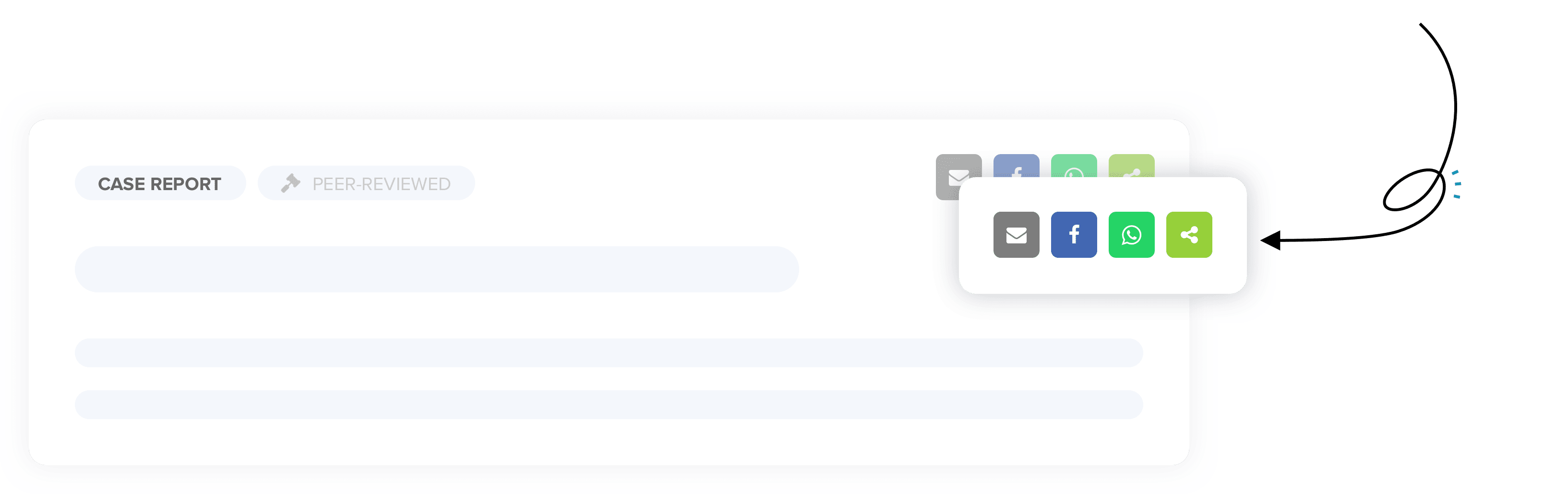
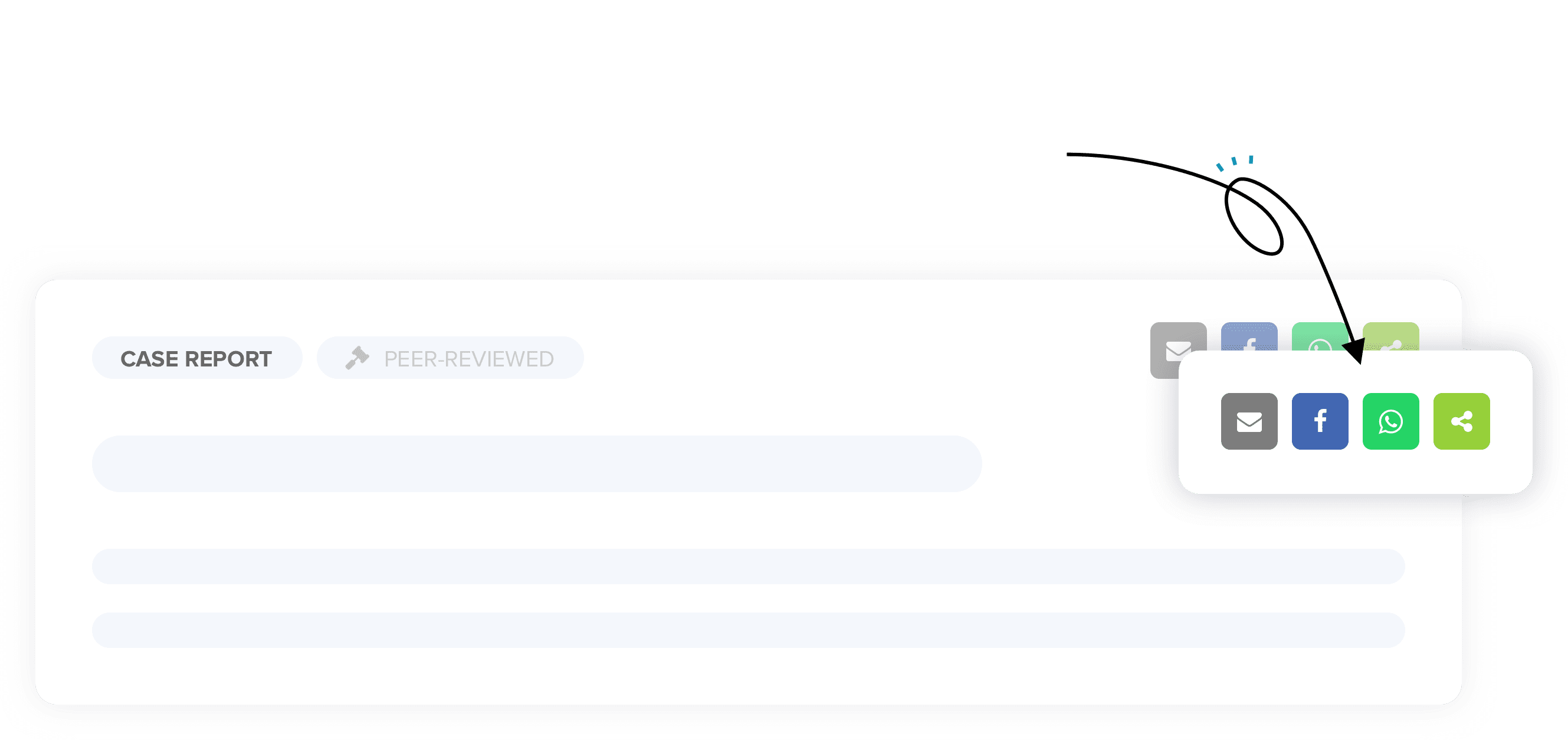
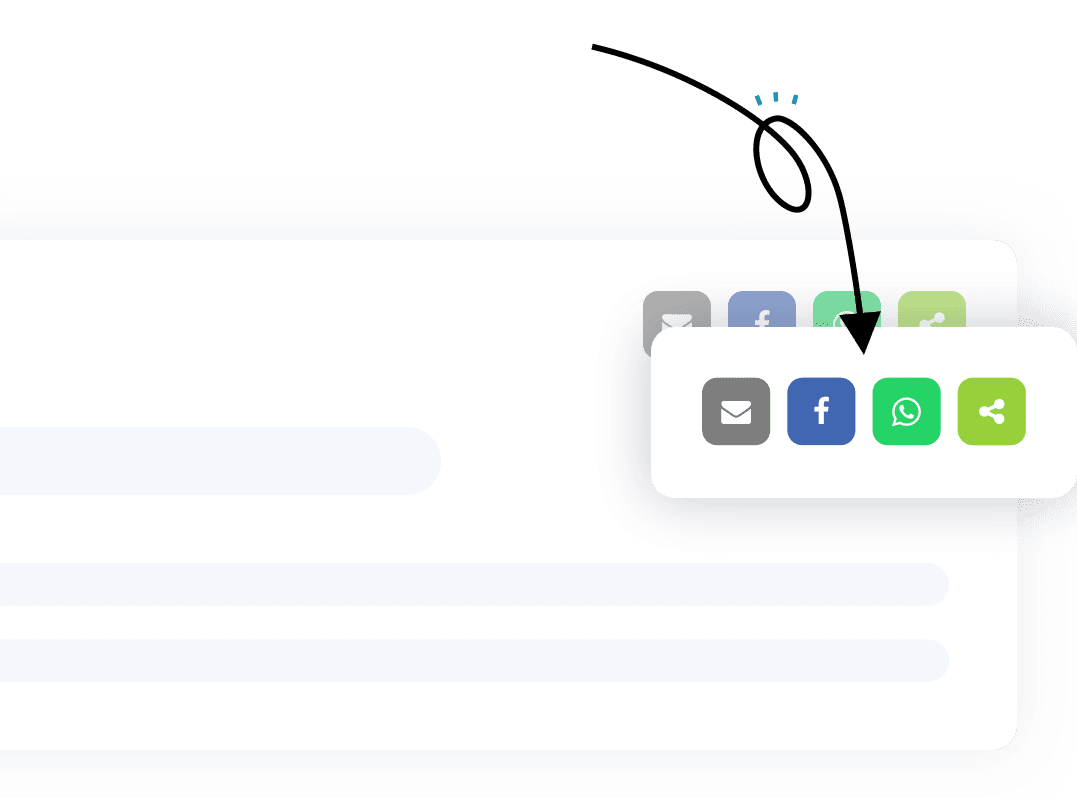
Share your newly published article with co-authors, colleagues, society members, friends, and family. If they are active on social media, encourage them to share the link to your research using the sharing tools on your article page.

Post on Social Media
With a rapidly growing number of online medical communities, there’s never been a better time for sharing your work. Promote your article on social media platforms, and don’t forget to tag your co-authors, institution, and funding source so they can share the article too. And remember to hashtag #cureusmedical so we can re-post and amplify your work.
Have you checked your dashboard to see if your article has qualified for Article Promotion? High-quality research articles are eligible for fee-based promotion via our social media channels, online forums, and Cureus-run social media ad campaigns.

Create a Video Abstract
Build buzz and spread awareness by recording a 30-second to two-minute “self-portrait-style” video describing your article and findings. We’ll share your video with over 90,000 people across our Facebook, YouTube, X, LinkedIn, BlueSky, and Instagram accounts. You can see examples of video abstract summaries here and here!
Here’s how you can create a video for effective article sharing and research promotion:
- Find a quiet place to film with ample lighting.
- Introduce yourself (your name and institution) and, if you’re a medical student, don't forget to state the name of the senior author. (Multiple authors per video are welcome.)
-
Please stay on topic and stick to the subject matter of the article.
- Why is this topic of interest to the general public or the medical community?
- What was the conclusion of your research?
- What will you do next? Will you expand on this research? Are you starting new research?
- Email your video to [email protected]. Please include any social media handles for you, your co-authors, and your institution so we can tag everyone properly.
For enhanced accessibility, we recommend adding subtitles to your video using https://www.veed.io/tools/ai-video, but this is not required. And remember, you don’t need your own social media accounts to participate!

Find Us
Use hashtag #Cureus when sharing your article on social media so we can find your post more easily!

Connect With Research Communities
For maximum research promotion, sign up with these research-sharing organizations and create an ORCID ID to more easily connect with other researchers.

ResearchGate is a widely-read online community for researchers to share work with their peers.
An ORCID iD is a unique, open digital identifier that helps organize workflows such as manuscript and grant submission, and supports automated linkages between you and your professional activities.
For a fee, Research Square helps communicate your research to a broader audience by creating short videos that can be understood by a lay audience, which is perfect for sharing articles through social media.

Academia is an easy way to share articles with millions of people across the world for free. One study found that articles uploaded to Academia receive a 69% boost in citations over 5 years.

Mendeley is a free reference manager and academic social network that can help you organize your research, collaborate with others online, and discover the latest research.

Google Scholar is a search engine and social media platform showcasing author profiles and publications, with citations and reads pushing articles closer to the top of future Google Scholar search results.

Pitch to Podcasts, Blogs and Media

If your research institution or lab has a podcast or blog, they may be looking for content. There are also several medical research and healthcare podcasts and blogs that you could contact regarding your findings.
Starting your own blog is also a method of research promotion. You can organize and showcase your work while also inviting guest bloggers and researchers to contribute!
One of the best ways to generate awareness of your research is by connecting to media relations professionals. (Your academic institution likely has a press or media department.) Consider writing a press release to send to editors, journalists, and publications to reach a broader, more diverse audience. Does your article explore a trending medical topic? Identify the most compelling and newsworthy component of your research, write the press release, and start pitching and sharing your article!
How can I increase the visibility of my published article?
Cureus offers targeted article promotion to increase visibility on sites like LinkedIn and Facebook through customized marketing and organic social media posts. You can also reach the right audience with practical techniques to increase the visibility and citation impact of your work, such as social media tagging and video summaries.
Scholarly Impact Quotient (SIQ) scoring is another tool you can use to enhance your visibility. Colleagues are encouraged to read and rate your work, and high ratings can make your work stand out on the platform.
What role do social media and academic channels play in promoting research?
Academic channels and social media accelerate the distribution of Cureus research by bypassing traditional barriers. Through high-impact, real-time discussion and visual content, platforms like X and LinkedIn can enhance the visibility of your research.
Cureus authors should link profiles such as ORCID, Google Scholar and LinkedIn to increase visibility and optimize impact. This establishes a cohesive online identity, ensuring you are appropriately credited in online citations and mentions. Additionally, tag your journals on social media and use academic channels to improve institutional prestige.
Does Cureus provide tools or resources to help authors promote their work?
Yes, Cureus provides several dedicated tools and resources to help writers make their work as visible and influential as possible.
- Article Promotion: Qualifying authors can purchase tiered promotion packages that consist of targeted social media advertising and organic social media posts.
- Academic Channels: A subscription-based service that allows institutions to highlight member research.
- Monthly Emails: The Cureus network receives monthly emails highlighting published articles.
Can I track engagement (reads, downloads, citations) after promoting my article?
Yes. Once your content is published on Cureus, the article metrics dashboard allows you to monitor engagement statistics like views, downloads, and citation activity. This information gives you insight into your article's influence and reach as you continue to promote your work through social media, academic networks and professional channels.
Start Sharing!
Cureus has resources for everyone in the medical research community, including authors, reviewers, and editors. Join Cureus and follow our comprehensive article sharing guide to optimize your research promotion and help revolutionize how medical knowledge is published and disseminated.
Create my free account