Abstract
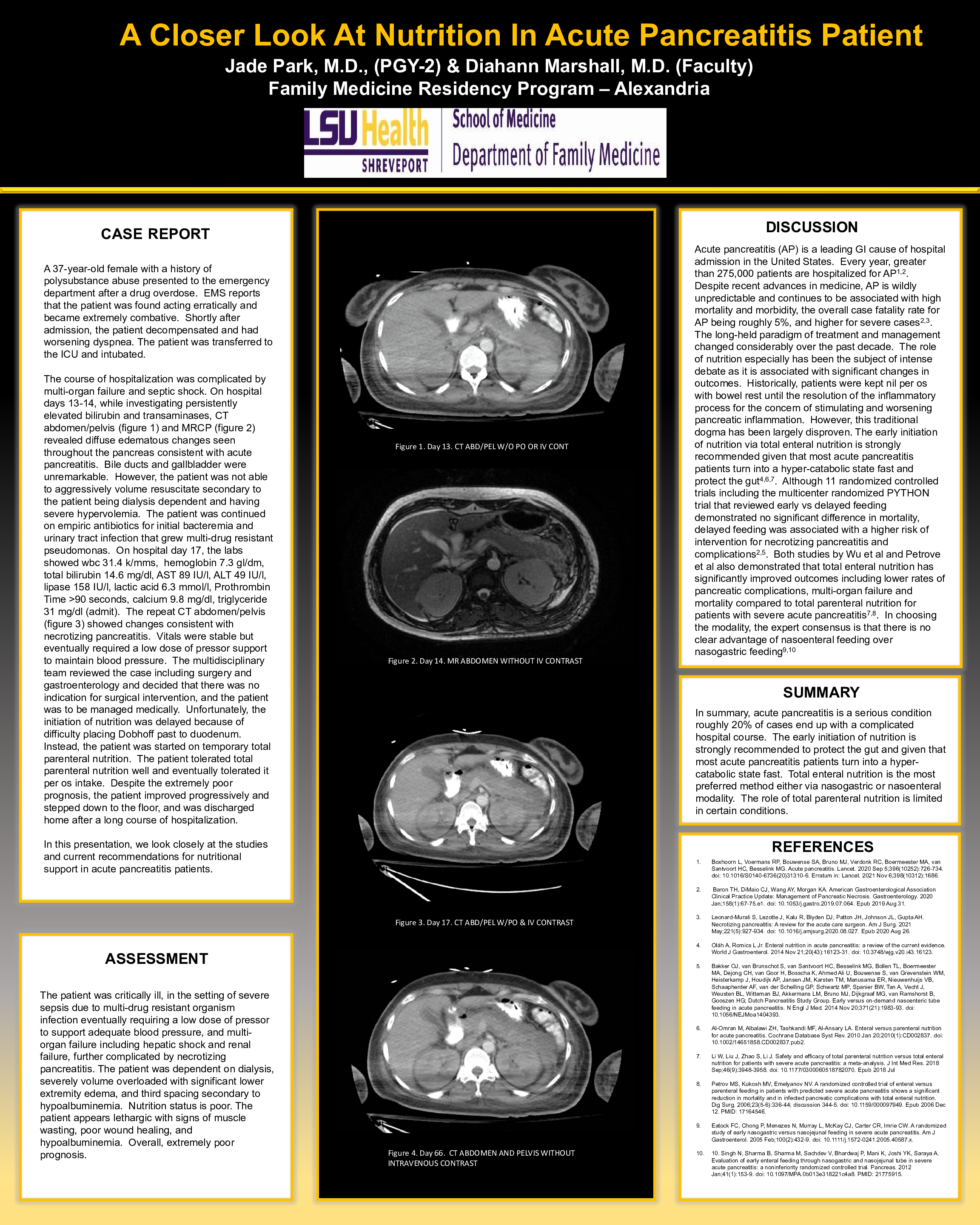
Acute pancreatitis (AP) is a leading GI cause of hospital admission in the United States. Every year, more than 275,000 patients are hospitalized for AP.
Despite recent advances in medicine, AP is wildly unpredictable and continues to be associated with high mortality and morbidity, with the overall case fatality rate for AP being roughly 5% and higher for severe cases. The long-held paradigm of treatment and management changed considerably over the past decade. The role of nutrition especially has been the subject of intense debate as it is associated with significant changes in outcomes. Historically, patients were kept nil per os with bowel rest until the resolution of the inflammatory process for the concern of stimulating and worsening pancreatic inflammation. However, this traditional dogma has been largely disproven. The early initiation of nutrition via total enteral nutrition is strongly recommended, given that most acute pancreatitis patients turn into a hyper-catabolic state fast and protect the gut. Although 11 randomized controlled trials, including the multicenter randomized PYTHON trial that reviewed early vs delayed feeding, demonstrated no significant difference in mortality, delayed feeding was associated with a higher risk of intervention for necrotizing pancreatitis and complications. Both studies by Wu et al and Petrove et al also demonstrated that total enteral nutrition has significantly improved outcomes, including lower rates of pancreatic complications, multi-organ failure, and mortality compared to total parenteral nutrition for patients with severe acute pancreatitis. In choosing the modality, the expert consensus is that there is no clear advantage of nasoenteral feeding over nasogastric feeding.