
Abstract
Introduction: Negative pressure wound therapy (NPWT), also known as vacuum assisted sealing and vacuum-assisted wound closure, is an adjunctive therapy used post operatively to better manage open wounds. The therapeutic benefits of NPWT include accelerated wound healing by utilizing negative or sub-atmospheric pressure to the wound surface, stabilization of the wound environment, increase in blood flow to promote healing, and deformation of granulation tissue.
Research on the prevalence and management of inguinal abscesses has been limited so far. Studies show that management of inguinal abscesses has involved different kinds of wound care such as surgery for reconstruction, debridement and frequent dressing changes. Inguinal abscesses are extremely challenging to manage due to high friction, stress, and tension in the inguinal area along with an increased risk of bacterial transfer from nearby GI or GU sources.
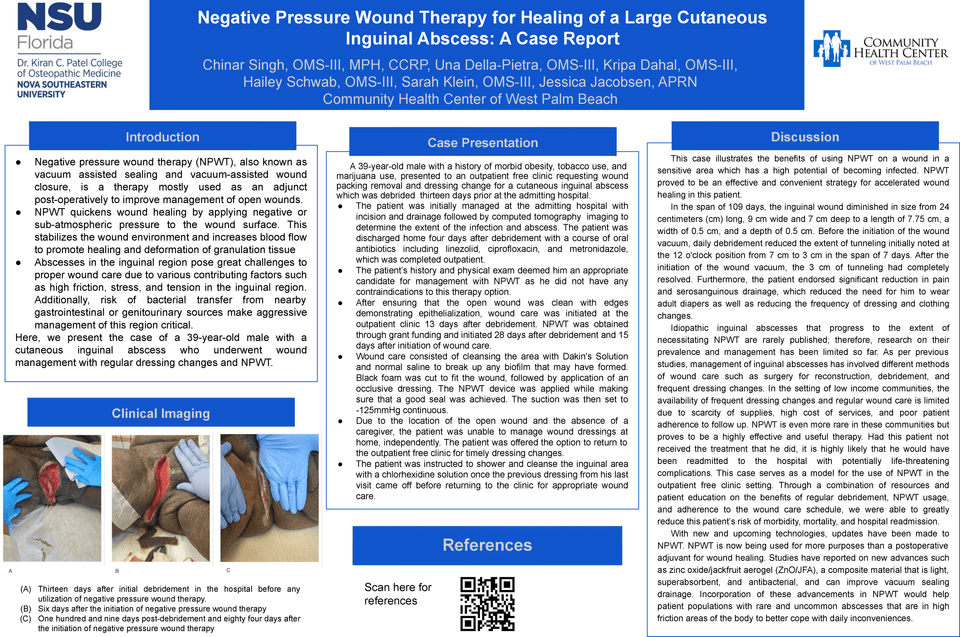
Case Description: We present the case of a 39 year old male who presented to an outpatient free clinic requesting wound packing removal and change for a giant cutaneous inguinal abscess post debridement done on 16 November, 2022.
He had initially presented to the emergency room on 14 November, 2022 for what he described as "a boil" accompanied with progressively worsening non radiating right sided gluteal pain. After attempting to drain the swelling, CT imaging of the abdomen and pelvis was obtained showing cellulitis related changes in the perianal area sans fluid collection along with subcutaneous emphysematous changes. He was taken for emergency surgery the same day for incision and drainage, hospitalized for 1 week with IV antibiotics, and was discharged home with oral antibiotics.
Initially, due to the location of the open wound and because the patient had no caregiver, it was difficult to change the wound dressing independently. The patient was offered the option to return to the outpatient free clinic for timely dressing changes. Once the previous dressing came off, the patient would shower and cleanse the inguinal area with chlorhexidine solution before returning to the clinic for a dressing change. During the dressing change, it was ensured that the open wound was clean with edges demonstrating epithelialization. The NPWT device was then applied while making sure that a good seal was achieved. The suction was then set to -125mmHg continuous. NPWT played a large part in improving our patient’s quality of life with significant pain and drainage reduction which in turn reduced the need for wearing an adult diaper, frequency of dressing changes, and frequency of clothing changes.
Discussion: This case illustrates the benefits of utilizing NPWT to treat an extensive inguinal abscess complicated with cellulitis and emphysematous changes.


