Early Detection of Brain Metastases using Texture Analysis on MRI Scans
Abstract
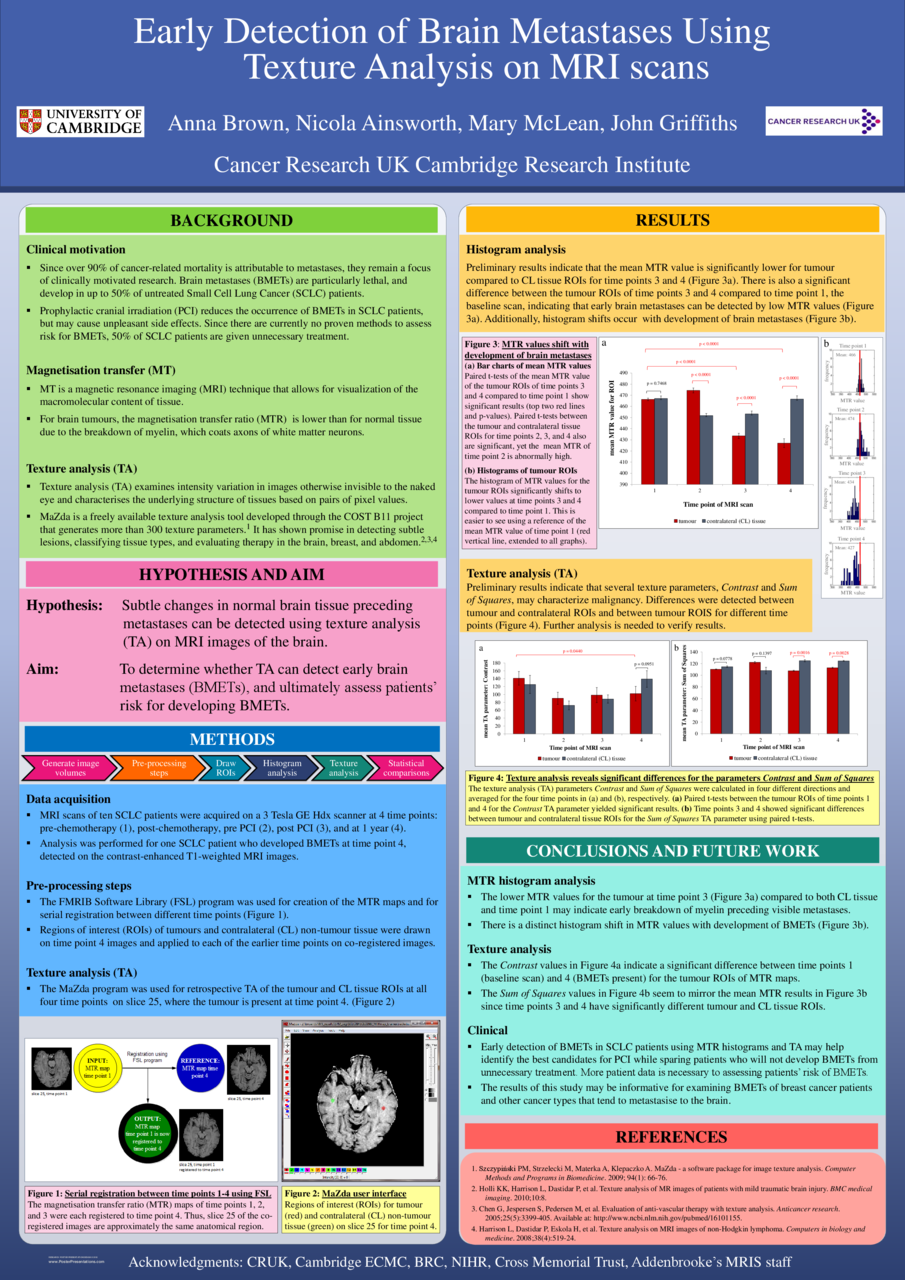
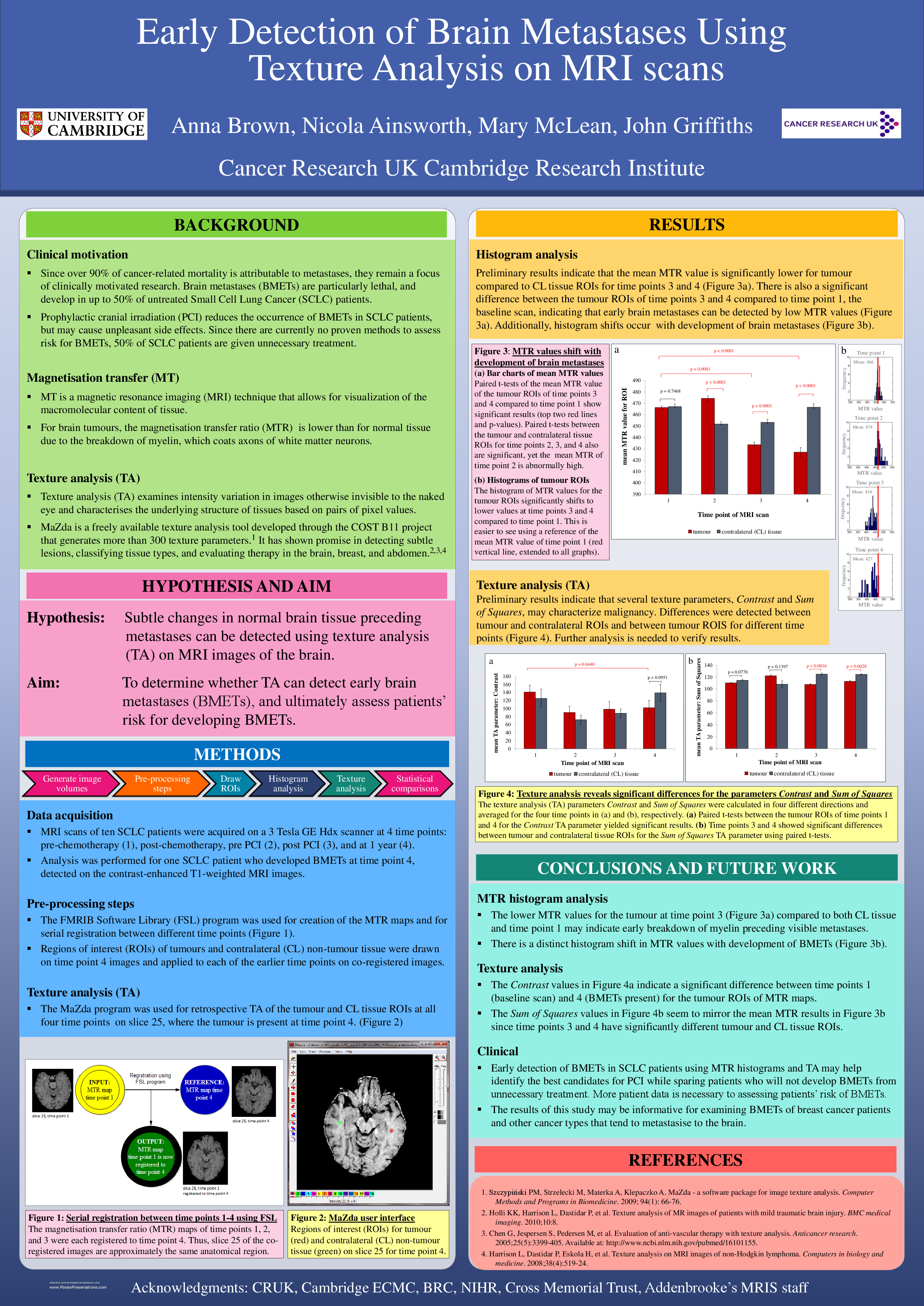
Identifying and treating metastases remains an elusive challenge for many cancers. Since over 90% of cancer-related mortality is attributable to metastases, they remain a focus of clinically-motivated research. Brain metastases (BMETs) are particularly lethal, and develop in up to 50% of untreated Small Cell Lung Cancer (SCLC) patients. Prophylactic cranial irradiation (PCI) reduces the occurrence of BMETs, but may cause unpleasant side effects. Since there are currently no proven methods to assess risk for BMETs, 50% of SCLC patients are given unnecessary treatment.
Texture analysis (TA), which quantifies intensity variation in images, may assist in the early detection of BMETs. Recent studies have shown that TA identifies subtle brain lesions in magnetic resonance imaging (MRI) scans of patients with multiple sclerosis and other neurodegenerative diseases. Our hypothesis is that subtle changes in normal brain tissue preceding metastases are detectable by TA. Our aim is to determine whether TA can detect early BMETs, and ultimately assess SCLC patients’ risk for developing BMETs.
Analysis was performed on MRI scans (3 Tesla) acquired from ten SCLC patients. Patients were scanned at four time points, from pre-treatment to follow-up at one year. Two SCLC patients developed BMETs, and the MaZda TA program was used for retrospective analysis on those patients with freehand and standardized ROIs of the tumours and contralateral tissue. Preliminary results indicate that histogram shifts occur during the normal to neoplastic transition, and that differences in the distribution of pixel intensities for earlier time points can be detected with retrospective TA.
Related articles